




"Some seeds fell along the path, but were trampled on and the birds ate them up. Others fell on rocky ground, and when they sprouted, they withered because they had no moisture. Other seeds fell among thorns, and the thorns growing with them choked them. Yet other seeds fell on good soil, and when they sprouted, they produced a hundredfold." (Gospel of Luke, ch. 8, vv. 5b-8a*)
"I am concerned for you, that perhaps I have been laboring among you in vain (…). My little children, I am again in the anguish of childbirth until Christ is formed in you." (Letter to the Galatians, ch. 4, vv. 11, 19*)
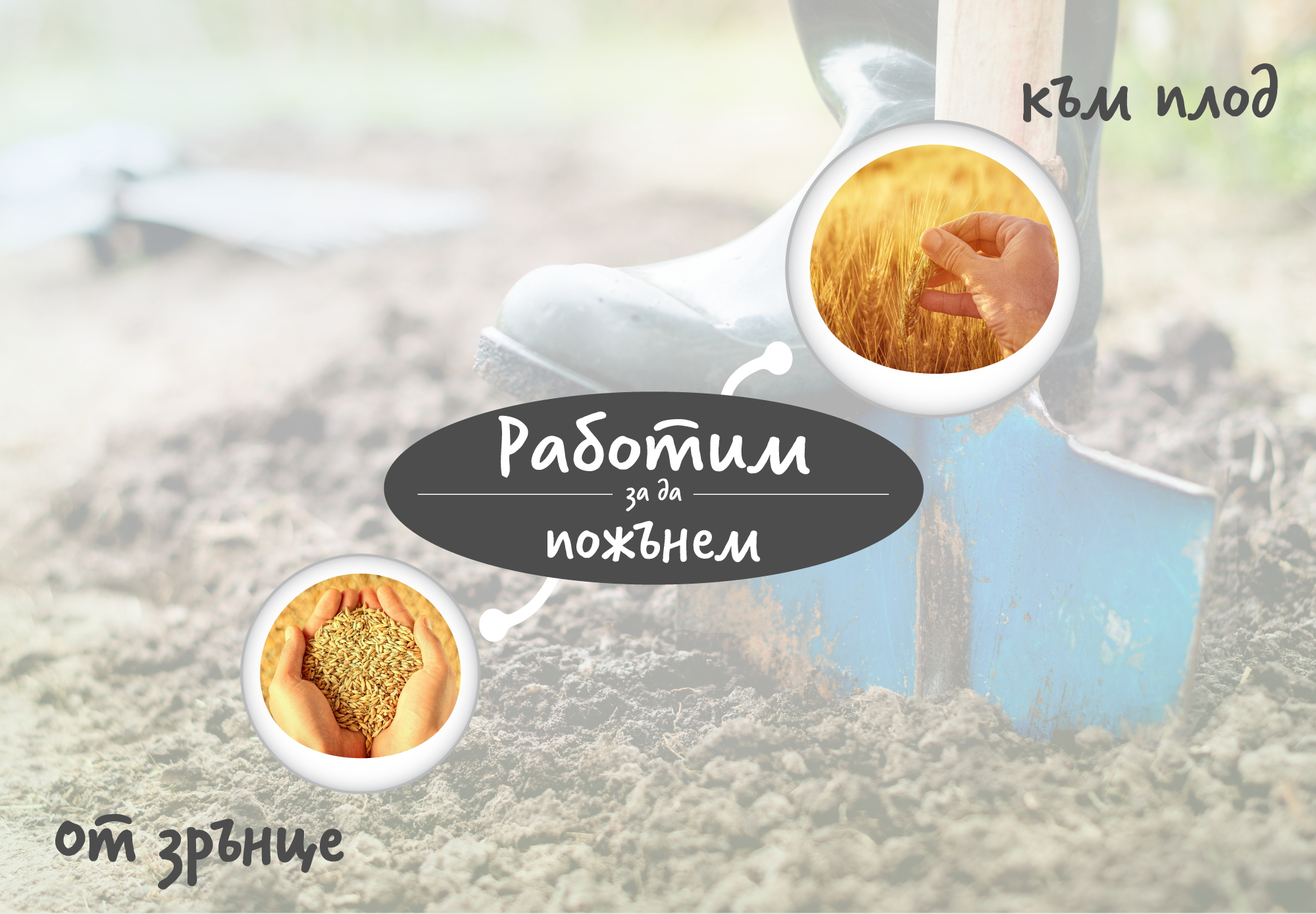
Sowing is a visible and evident process. We hold seeds in our hands—the word of God and the message of reconciliation. We have the strength in our hearts, which comes from the joy of our personal salvation. Joyful people cannot hide their smiles. We have a perimeter for sowing—these are the people who see us, know us, and communicate with us. What follows? Caring for the sown seeds. If you are someone who has never dealt with growing cereals, particularly wheat, you might easily think that after sowing, you have a few months of rest and just await the wheat stalks. Yes, but no! There is a lot of work to do until you reach the season of expectation.
The effort the sower puts in is twofold—to fight pests on the crops and influence the conditions in which the wheat grows. Pests are clear. They are the external threat—harmful insects, weeds. Everything that takes advantage of the growing stalks, which "steals" from the resources, the good nutrients in the soil, and the health and life of the crops themselves. How does a good farmer understand that there is a problem with the future harvest? By observing it very carefully. Being sensitive to all changes, to the emergence of signs of disease or damage, to anything new and unforeseen. How does the best farmer fight pests and the danger they pose? By preparing in advance, knowing them well, and anticipating their presence at various growth stages of the crops.
Pests will always be there because they go where they can take. If we look at caring for crops as a spiritual ministry, our duty as farmers is to first know who the pests are and to be alert for their appearance. In the parable of the sower, some enumerated pests are thorns and weeds that choke the wheat, causing it to perish. Jesus explains to his disciples that these choking "thorns" are life's issues and worries, greed and careerism, the desire just to have fun and not think of anything important, in our language. Besides this type of pest, there are also unfavorable conditions like compacted or rocky shallow soil where the seed either cannot germinate or fails to establish deep roots and withers under the scorching sun.
Okay, if the parable speaks of nothing more than sowing, why should we think we need to do more? Because we follow the life of the Apostle Paul, Apostle Peter, Apostle John, Timothy, Tabitha, Priscilla, and Aquila, all New Testament biblical heroes and most importantly, the Lord Jesus Christ. They don’t just give speeches and seminars, touching people briefly, or just post an article in a blog or post a picture with a good message on Facebook on holidays. They care and devote attention to the people entrusted to them. They truly and practically love them, guide them, serve them, rebuke them with love, encourage them. They help them grow and mature. They created not just good acquaintances, but disciples through friendship, personal sacrifice, and example. This process takes time, emotions, effort, sacrifices, and often disappointments. But it’s worth it for those last seeds that fall on good soil.
For us to work as farmers on God's field, we ourselves must have gone through the process of sowing, dying in the soil, resurrecting as crops, and maturing into stalks. Our personal relationship with God is vitally necessary for us to expect a "lasting fruit," for the Lord Jesus says: "I am the vine; you are the branches; whoever abides in Me and I in him, bears much fruit, for apart from Me you can do nothing(...) You did not choose Me, but I chose you and appointed you to go out into the world, to produce fruit, and for your fruit to remain, so that whatever you ask the Father in My name, He may give you." (Gospel of John, ch. 15, vv. 5, 16*) In the image of the vine and that of the sower and the wheat, we see that we are both farmers and the harvest itself. We work through God's power in the lives of the people around us, while at the same time, God cares for us, the fragile stalks of wheat, personally and through the people around us.
Challenge for the week: We know that it is very difficult to plan at the moment, but can you try to create a mini-plan for the week. What do you want to accomplish in the upcoming days until Sunday? How will your work benefit others? Who or where can you "water," "dig up," "weed"? Monitor the attitudes of the people around you. Is there anyone wanting to meet/hear from you for a long time that you keep postponing? Be encouraged, your labor in the Lord is not in vain.
*Bible quotes according to the text of the Bible, new translation from the original languages © Bulgarian Bible Society 2013.
Photo collage: Kiril Veselinski