


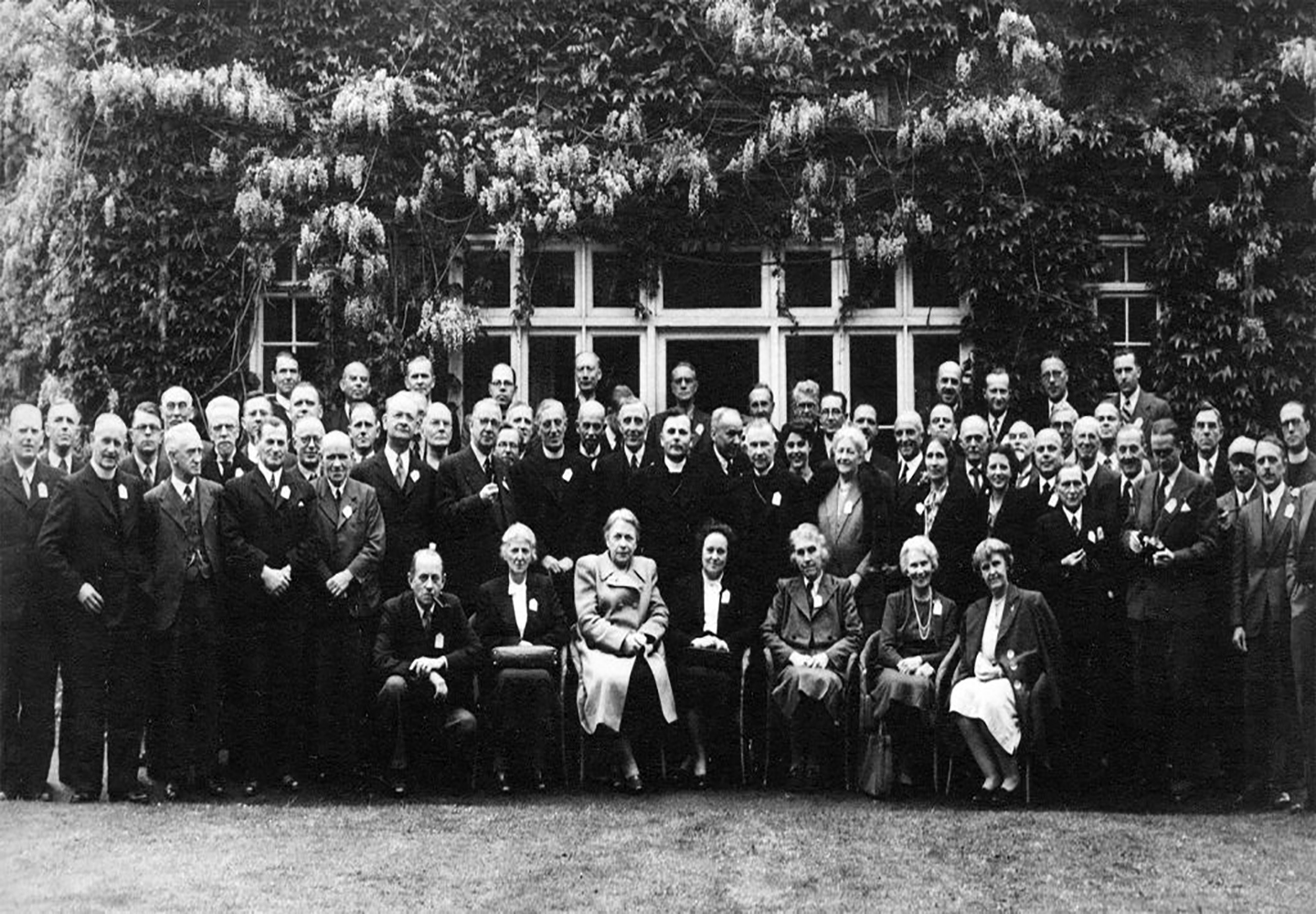
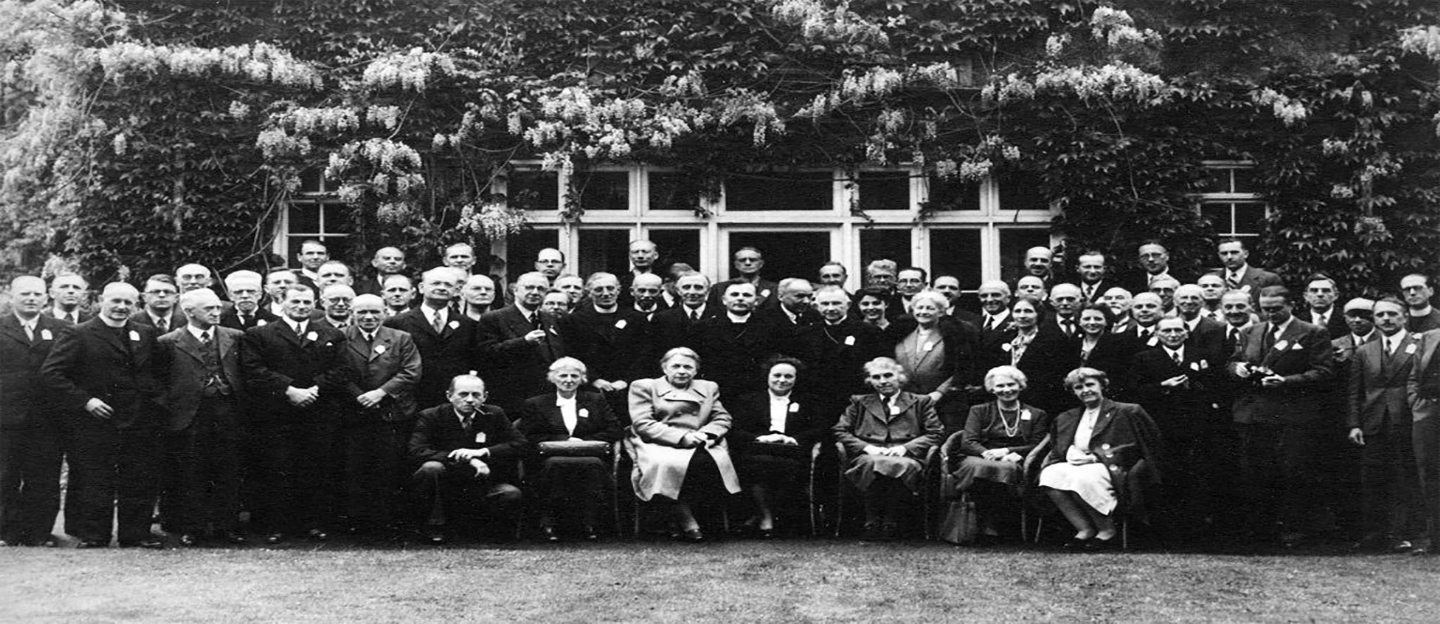
In May 1946, less than a year after the most destructive global conflict in modern human history, representatives from 13 national Bible societies gathered in Haywards Heath, UK. The delegates were convinced that "the world needs God's word" now more than ever, marking the beginning of the formation of a global Bible community—the United Bible Societies.
The conference participants, each with their own trauma from the war, were determined to work together so that "in such a time of need, everything necessary would be done, in cooperation with other Bible societies, to meet the need and offer a shaken world the word of Life and Power."
**The Beginning of Global Cooperation**
The activities of the first Bible society flourished following its establishment in 1804, and by the end of the 19th century, a network of agencies and associations was hard at work to reach people's hearts worldwide with the text of the Bible. Until then, this mission was primarily undertaken or led by individual Bible societies.
In 1930, the greatest movement towards cooperation was observed. In July 1939, during a conference, the Netherlands Bible Society used its 125th anniversary as an occasion to invite several other Bible societies to discuss future global cooperation.
"The hour for cooperation has arrived," exclaimed John Mott of the American Bible Society. "If we choose to exist separately from each other, we would only impoverish ourselves."
However, world events prevented these fresh ideas for cooperation from being realized. Just five days after the conference concluded, 1.5 million German soldiers invaded Poland, making World War II inevitable.
During the war, there were reports of decisive Bible printing and distribution. Bible societies faced enormous challenges as the military conflict impacted the printing and delivery processes, as well as the provision of resources for these activities. However, some Bible societies managed to distribute Bibles and individual Bible books even amid the chaos of war.
Pastor Dr. Hans Lilje, who would later represent Germany at the Haywards Heath conference, was imprisoned in Nuremberg. He was placed in isolation, forbidden by the authorities to keep his Bible. However, he knew the Scriptures so well that he found comfort in God's word. "We were strengthened by the thought that God's word is not bound," Pastor Lilje recalled.
"We know there is one light and one hope—the word of God, which will continue to guide us in the future."
**A New Beginning, but Together**
The experiences of individual Bible societies during the war only reinforced the resolve for cooperative work. After the end of hostilities, individual Bible societies reconvened in Haywards Heath. Despite widespread destruction and a changing world, they were hopeful about what could be achieved with faithful service to God but also had realistic expectations about the degree of challenges ahead. Challenges that would be best overcome by joining forces in partnership.
"There is not much hope in the world," remarked Bishop Eyvind Berggrav of Norway, who spent most of the war imprisoned, "but there is great hope in the Bible."
**Looking Forward**
Seventy-five years later, the world's need for the Bible continues to be met through shared commitment to achieving the common mission—a mission built on inherited faithfulness, dedication, and cooperation. From the initial 13 countries gathered at the conference, nearly 150 Bible societies have been established, serving in more than 240 countries and territories, reaching everyone with the life-saving words of God's word.
"Our perspective is global, as is the Bible's perspective," said Bishop Berggrav during the opening of the meeting in Elphinstone. "We stand before an opened door."
This open door to the world has guided the mission and vision of all the Bible societies in the United Bible Societies family over the past 75 years.
Text and images: United Bible Societies.
Post comment
«1»