


Our interest in biblical work is often directed towards leading biblical translations that have valuable historical and theological contributions. Alongside this, biblical workers have always sought ways for God's word to reach the smaller nations. Thus, in the 19th century, the British and Foreign Bible Society reached the peoples in the Ottoman Empire. We are grateful that because of this, we have had the Bible in our spoken language for 150 years.
Today, through the advancement of communications in the globalized world, many unknown tribes are discovered, who have their own language, different from all others. Bible translators face the challenge of ensuring that these "our little brothers" also have God's word. It turns out that every fifth person in the world lives without access to the Bible in their mother tongue!
One of the important initiatives of Christian missions around the world continues to be the translation of the Bible. The vision of translators from "Wycliffe Bible Translators" and their partners is for everyone to have access to God's word. They have accepted this responsible service as a calling. They continue to work even during the pandemic. There are still two thousand languages for which the Bible needs to be translated. (Note by the translator.)
The Bible continues to be the most printed and distributed book in the world. The global translation of the Bible is carried out by various biblical organizations.
Today, translations are becoming faster. The Bible translators at "Wycliffe Bible Translators", in collaboration with SIL International, are reaching a new phase. SIL is a religious organization that works with local communities worldwide to find and develop language solutions.
Their service among ethnolinguistic minority communities is motivated by the belief that all people are created in God's image and that languages and cultures are part of the richness of God's creation. SIL is involved in translation work in partnership with more than a thousand language communities worldwide. They are convinced that through the translation of the Bible or parts of it, the opportunities for a better life for these minorities are expanded.
"For as the rain and the snow fall from heaven..., so is my word that goes out from my mouth: It will not return to me empty, but will accomplish what I desire and achieve the purpose for which I sent it. And you will go out in joy and be led forth in peace".
At the end of 2018, the 1,000th New Testament translation by "Wycliffe" was completed
This is the edition in the Keleko language, spoken in South Sudan. This language group recently received the New Testament in their native language. Overall, the New Testament of the Scriptures now exists, translated into about 1600 languages. This marks an important milestone for the Bible translators from "Wycliffe", as this is the 1000th edition of the New Testament.
Ross Hearsman, Chief Executive Officer of "Wycliffe", at the celebration during the presentation of the Bible in the Keleko language, said: "On this day, a service was held in the Bidi Bidi refugee camp - the second largest refugee settlement in the world with more than a quarter of a million refugees. The worship became a renewed celebration for the new translation. Some refugees came forward and placed their hands on the donation basket without being able to make a donation. This was a sign that they affirm their decision: 'I dedicate myself to the Lord!' ".
Parts of the Bible in more than 3300 languages
With the translation of the Bible into the Keleko language, about ten percent of all the world's languages have a completed translation of the New Testament. Currently, Bible translations or parts of it are being made in nearly 2500 new languages. In some cases, the first phase includes a selected portion of the Bible, from the New Testament, or a part of it. They are already available in over 3300 languages. But according to "Wycliffe", about 1600 languages still do not have their translation.
Successful translation despite the war
This translation took 20 years of hard work by the translation team in the Keleko language. During this time, there was a long war between the Muslim north and the Christian and animist** African south. This eventually led to the independence of the south. SIL International has always been an important partner of "Wycliffe" regarding translation work, including the latest edition for 70,000 people of the Keleko language group in South Sudan. Indeed, many of them are now refugees in the Democratic Republic of Congo and Uganda. But they can now read God's word in their own language.
The newly signed peace agreement also gives them hope for returning home. The new translation of the Bible promises even greater hope: a direct encounter with God through His written word in the language of the heart.
The pace is accelerating
The goal of the "Wycliffe 2025" campaign to create a successful translation program for all 7000 languages by 2025 faces great challenges. Almost 45% of the world's languages will disappear by the end of the century, as many of them have no written form. At the same time, technology has made the translation process faster and more efficient. According to Hearsman, it took the campaign 50 years to reach the mark of 500 translations by 2001, but only 17 years to complete the next 500.
Valuable contribution of local collaboration
The translation work is progressing faster largely due to the growth of the church in the south and east, also due to the technological advancement that facilitates the translation process, as well as broader communication and easier travel opportunities. The growing involvement of local collaborators and translators participating in the projects, as well as collaboration with neighboring communities and similar language groups, accelerates the translation work.
Hearsman reveals that most languages without any written form are found in the southern Pacific islands, where a total of almost 1300 different languages are spoken. For example, over 800 languages are spoken in Papua New Guinea alone. "The biggest challenge is the immense volume, but geographic accessibility and, in some cases, the lack of a written alphabet are also significant obstacles. This is part of what is expected of the community" he shared. "By bringing together groups of people who speak different but similar languages, they can collaborate on translation projects, learn from each other, and build communities, while at the same time speeding up the moment when they will be able to have God's word in their language".
*Bible quotes are according to the text of Bible, new translation from the original languages © Bulgarian Bible Society 2013.
**Primitive belief in the existence of a soul in every object.
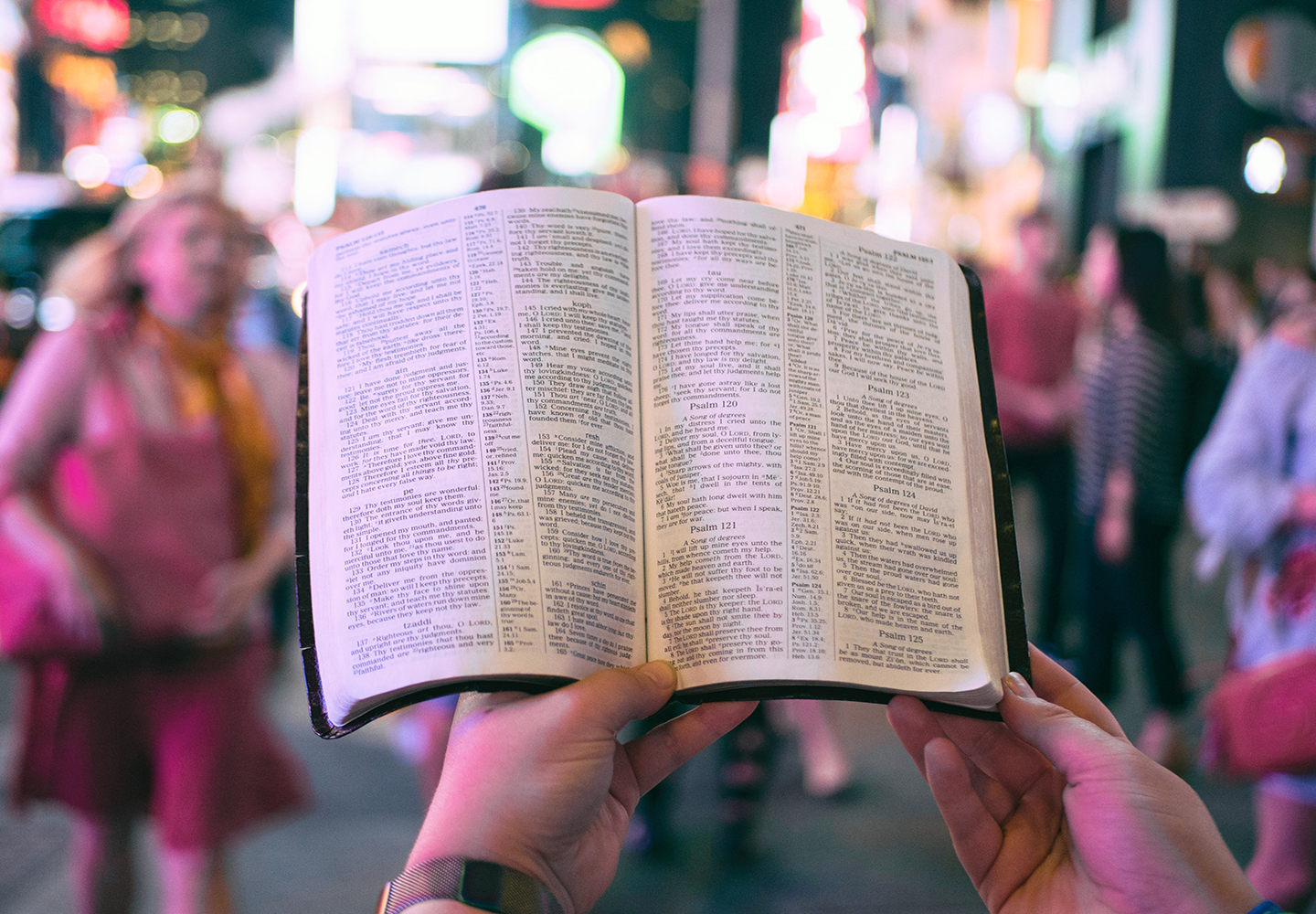
Photo: Aaron Burden/Unsplash.com